The Frictionless Trap: Why Digital Convenience is 2026’s Biggest Wealth Killer
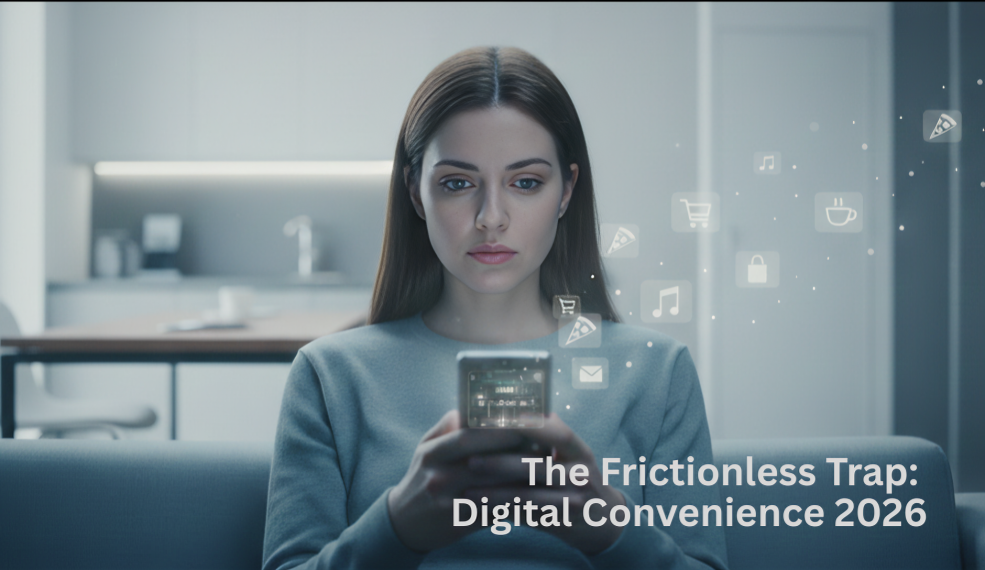
In 2026, the world moves at the speed of thought. We pay with a tap of a smart ring, a glance at our phone, or even a palm scan at the checkout. Buying something online often means a single click, thanks to saved card details and biometric verification. These innovations promise to simplify our lives, making purchases quicker and more convenient than ever before. It feels futuristic, efficient, and, let’s be honest, pretty cool.
However, while technology rapidly advances to make our transactions smoother, there’s a silent, stealthy side effect emerging: it’s making us spend more without even realizing it. The very convenience designed to make our lives easier is, ironically, becoming one of the biggest threats to our financial well-being. When the “pain” of paying disappears, so does our natural impulse to save. This post will pull back the curtain on this phenomenon, known as “frictionless spending,” and equip you with the knowledge to protect your hard-earned money from this subtle, yet powerful, trap.
What is Frictionless Spending?
To truly understand the danger, we first need to define our terms. At its core, “friction” in the context of spending refers to the small pauses, actions, or mental efforts required between deciding to buy something and actually completing the purchase. Think of it as the tiny speed bumps that naturally make us think twice before parting with our cash.
Historically, this friction was built into the system. If you wanted to buy something, you had to physically go to a store, select an item, and then hand over cash or swipe a card, perhaps even signing a slip. Each step provided a moment for reflection.
But nowadays, that friction has largely vanished. Consider these everyday examples:
- One-click ordering on your favorite online marketplaces. The item you want is just a single tap away.
- Biometric payments using your face or fingerprint. A purchase is completed in less than a second, almost as if you willed it into existence.
- Auto-fill credit card details in your web browser or within apps. You don’t even need to type out your numbers anymore.
- “Buy Now, Pay Later” (BNPL) options integrated directly into checkout flows, making large purchases seem more affordable at the moment.
Because of this constant push for speed and simplicity, the process of spending has become so seamless, so effortless, that it almost feels like a passive action rather than a conscious financial decision. And as we will discover next, this speed isn’t just convenient; it’s a powerful psychological tool against your wallet.
The Science of “Spending Pain”
To grasp why frictionless spending is so dangerous, we need to talk about “spending pain.” Decades of psychological research have shown that physically handing over cash causes a small, but significant, emotional sting. It’s a tangible loss, a physical separation from your money, and your brain registers this as a minor form of pain. This “pain of paying” is a natural deterrent that makes us more mindful of our purchases. It’s why many people find it easier to save when they use cash for daily expenses.
However, modern digital payments cunningly hide this sting. When you tap your phone, scan your palm, or click “buy now” online, there’s no physical exchange. The money simply disappears from your account number on a screen. Your brain, therefore, doesn’t register the same level of loss. Instead, it processes the transaction more like a “game” or a simple interaction, rather than a significant expenditure of resources.
The immediate consequence? Because it feels “free” or at least significantly less painful in the moment, you are far more likely to make impulse purchases, sign up for more subscriptions, or simply spend more often without genuine reflection. This leads to a frustrating cycle where your money management application might show a cascade of small charges at the end of the month that you barely remember making. The invisible nature of these transactions contributes to a lack of awareness, making it incredibly difficult to stick to a budget or achieve your savings goals.
How to Spot the Trap in Your Daily Life
The frictionless trap isn’t always obvious. It often lurks in the background of our digital lives, subtly encouraging us to spend. Being aware of where it hides is the first step toward regaining control. Look out for these common scenarios:
- Social Media Checkouts: Many platforms now allow you to purchase products directly within the app, sometimes with just a couple of taps, without ever needing to visit an external website.
- Subscription Auto-Renewals: Those “free trials” that automatically roll into paid subscriptions unless you specifically cancel are a classic example. Your card is already on file, making the transition effortless for the company.
- In-App Purchases: Whether it’s an extra life in a game or a premium feature in a productivity tool, these small, quick purchases add up quickly because they require minimal effort.
- Food Delivery and Ride-Share Apps: With saved payment details and often a generous tip suggestion, ordering food or a car is just a few taps away, making it all too easy to bypass cooking or public transport.
- Digital Wallet Defaults: Having your primary credit card set as the default in your digital wallet means you rarely have to think about which card you’re using, or even if you should be using it.
Now that we’ve identified these insidious traps, the crucial question remains: how do we escape them? How can we regain a sense of conscious control in an age of effortless spending?
Strategies to Add “Healthy Friction” Back
The good news is that you don’t have to abandon technology altogether to win against frictionless spending. Instead, you can strategically reintroduce “healthy friction” into your financial habits. These small actions can create the necessary pause for reflection, allowing your rational brain to catch up with your impulsive desires.
- Unsave Your Cards Everywhere: This might seem annoying at first, but it’s incredibly powerful. Delete your saved credit card details from online shopping sites, food delivery apps, and even your browser’s auto-fill settings. Forcing yourself to physically type in your card number, expiration date, and security code every single time creates a crucial 30-second “think time.” This pause gives you a moment to ask: “Do I really need this?” or “Is this worth the effort?”
- Implement the 24-Hour Rule: For any digital purchase over a set amount (e.g., $50 or $100), commit to waiting one full day before clicking “buy.” Add the item to your cart, close the browser, and revisit it 24 hours later. Often, the initial urge will have passed, or you’ll realize the purchase wasn’t as essential as it seemed in the heat of the moment. This simple delay can save you from countless impulse buys.
- Practice Immediate Transaction Logging: Instead of waiting for your bank statement at the end of the month, make a habit of logging your spending immediately after each purchase. This could be as simple as jotting it down in a notebook or, more effectively, inputting it into an expense tracking app. This act of manual recording makes the “invisible” digital money feel real again, connecting the convenience of the purchase with its actual financial impact. It transforms a fleeting digital transaction into a concrete record, making you far more accountable to yourself.
Reclaiming Your Financial Control
In our lightning-fast, digitally driven world, it’s easy to get swept away by the current of convenience. But when it comes to your money, speed is truly for the seller, while intentional slowness is for the saver. By understanding the psychology behind frictionless spending and proactively introducing “healthy friction” into your daily routines, you can reclaim control over your finances.
Remember, the goal isn’t to make life harder, but to make your financial decisions more conscious and deliberate. Using a dedicated budgeting application is a fantastic way to gain a clear, holistic view of your financial landscape, ensuring that every tap, swipe, or click aligns with your long-term goals.
For those looking for a reliable and user-friendly solution, consider Dollarbook. As an expense tracking app, it allows you to easily log your ins and outs, giving you the power to see exactly where your money is going, even amidst the most seamless digital transactions. By actively using a tool like Dollarbook, you transform passive spending into an active money management application, keeping your wealth securely in your pocket, rather than lost in the digital ether.